 T Conner | Coverage Guide
Check the network before you count on it
A document-led process for verifying clinicians, facilities, access rules and costs in a specific plan.
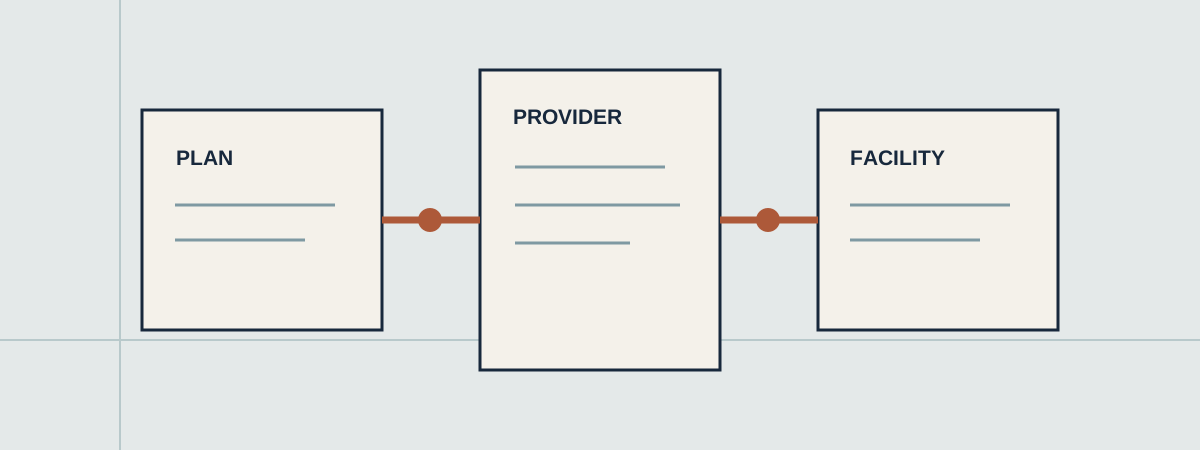
A PPO label can be useful, but it does not tell you whether a particular visit, clinician, building or medication will be covered at the cost you expect. The reliable route is to match the exact plan to the exact care path, then keep the answers with the documents. Use this checklist while comparing plans, again before a significant appointment, and whenever the plan year changes.
Record the exact plan identity
Write the full plan name, issuer, year and network name shown on the quote or member document. If you have only a carrier name, ask for the plan's Summary of Benefits and Coverage and its current provider directory. A company can offer several networks; a provider's acceptance of one says little about another. HealthCare.gov's explanation of plan types gives the general difference between PPO, HMO and other labels, but the plan documents control the details of the option in front of you.
If you are comparing two proposals, create two columns. Put the document date beside each one. Do not combine an older directory with a new plan year without checking that the network still applies. A quoted premium and the printed benefits may have different effective dates, so ask the issuer to confirm the version you are using.
List the care you want to verify
Begin with people and places, not only specialties. Record the clinician's full name, practice location and the facility where a service would occur. If a future episode of care may involve a laboratory, imaging center or hospital, include those too. A surgeon's participation does not automatically settle every other provider or facility involved in an episode. This is a question to put to the plan and the providers, not a promise about how a claim will be paid.
Make a separate list of medicines and pharmacies if relevant. Drug formularies and pharmacy networks are separate documents from provider directories. For recurring care, ask whether the plan requires referrals or prior authorization. Note whether your question is about an office visit, a procedure or an emergency, because the answer may differ.
The list need not predict every future need. Its job is to reveal the specific uncertainties behind an attractive plan name. If a person is particularly important to you, put that question at the top of the comparison rather than treating it as a late detail.
Search the current directory
Search the issuer's own directory using the exact plan and location. Keep the result or a screenshot showing the date, network and address. Then call the provider's office and ask whether it accepts that same plan at that location for the service you expect. Offices may ask for a member ID if you are already enrolled; do not enter personal medical details on this site.
If the directory and office answer differ, ask the issuer for a written clarification. Neither a search result nor a phone answer, on its own, determines what a final claim will pay. You can also ask how to verify participation close to the appointment date. Keep the name or reference number of the person who answered when offered.
Do not substitute a broad statement such as “we take your insurance” for a plan-specific answer. The office may mean a different network, and a facility may have separate billing arrangements. Phrase the follow-up question with the complete plan name and service location.
Read the access rules, then the cost rules
On the Summary of Benefits and Coverage, find the section for the service you expect. Note the copayment or coinsurance, whether the deductible applies, and whether the rule differs in and out of network. Ask about referral and prior-authorization requirements where the document directs you to do so. Some services have limits or exclusions in the fuller policy document; request it when the summary leaves a material question unanswered.
The monthly premium is only one part of the calculation. HealthCare.gov's total-cost guide distinguishes premiums, deductibles, copayments and out-of-pocket spending. Use the annual cost worksheet to put those figures together. Do not assume that an out-of-network expense counts toward the in-network out-of-pocket maximum; read the precise plan terms.
A good comparison asks two questions at once: can I obtain the care through the network I intend to use, and what could I pay under the relevant cost-sharing rules? Either answer alone can be misleading.
Keep an answer trail
For each important check, save the plan name, document link or copy, date, provider or issuer contacted, and the answer. A compact record lets you repeat a question without relying on memory. It is especially helpful when enrollment and an appointment happen months apart.
If the answer remains unclear, list exactly what is unresolved. “Is Dr. X in network for Plan Y at Location Z on the date of service?” is easier to resolve than “Does this PPO cover my doctor?” Ask the issuer what written document or channel can settle the question. Keep any written clarification with the original documents.
Before enrolling, check the issuer's current documents rather than relying on this article's general explanation. Before care, verify time-sensitive provider and authorization details again. The NAIC consumer health-insurance page offers additional shopping and licensing resources.
When this checklist is not enough
Coverage depends on the policy, enrollment, service, network status and other facts this guide cannot evaluate. Urgent health needs should be handled with appropriate medical care, not delayed for a website checklist. For advice about a particular policy or eligibility, speak with the issuer or a currently licensed professional whose status you have verified. The goal here is a clearer record of questions and documents, not a guarantee of coverage.